A sliding gate rolls sideways along the fence line, either on wheels in a ground track (a V-track gate) or hanging on roller carriages with no track at all (a cantilever gate). The operator drives it with a gear rack or a chain. When a slide gate acts up, the cause is usually mechanical: debris or ice in the track, worn wheels or rollers, a loose rack, or a gate knocked out of line. We connect you with independent local gate pros who repair slide gates and their operators.
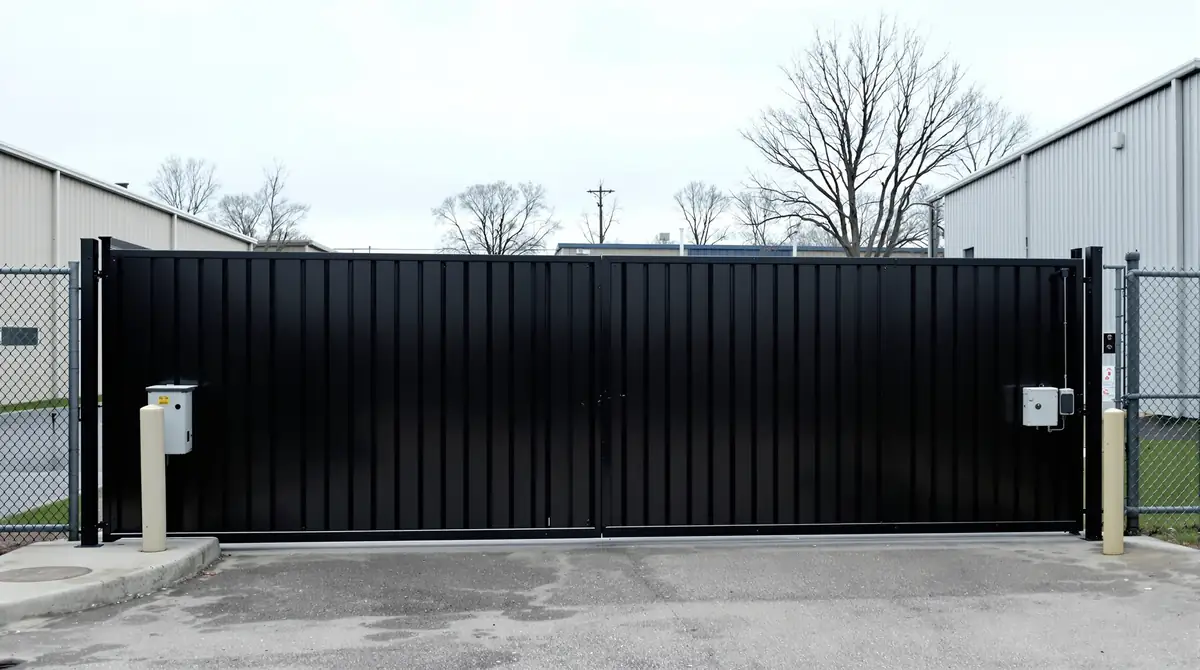
Sound familiar?
- Gate jumped off its track or wheels
- Grinding, squealing or jerky movement
- Opener runs but the gate doesn't move (rack or chain slipping)
- Gate stops partway in winter
- Gate leans or rubs on the guide rollers
- Gate hit by a vehicle and now binds
What a gate tech typically checks
- Track or cantilever carriages, wheels and guide rollers
- Gear rack or chain, and how it meshes with the operator
- Gate alignment, plumb and end stops
- Operator, limits and force settings
- Photo eyes and safety edges along the path
Before you call
- V-track (wheels on a ground track) or cantilever (no ground track)
- Operator brand and model, if you can see the label
- Photos of the track or rollers and the operator end
- Whether the gate came off the track or was hit
Questions
Why does my sliding gate stop in winter?
Ice or packed snow in a ground track, or frozen wheels, are the usual causes. The operator feels the resistance and stops or reverses. Keep the track clear and dry; if it keeps happening, a pro can check the wheels, the track and its drainage.
Can I put my sliding gate back on the track myself?
Not with the power on, and not if the gate is heavy, bent or leaning. Slide gates can weigh hundreds of pounds and can fall if they come off their rollers, so keep people clear and call a pro.